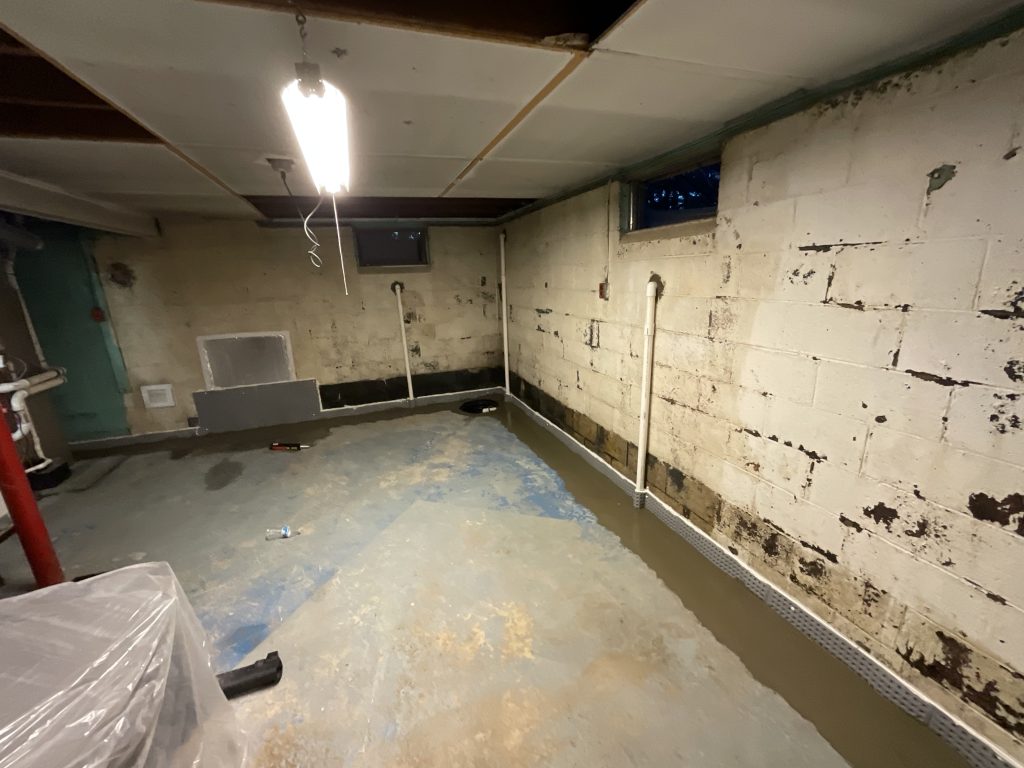
You’ve scrubbed. You’ve bleached. You’ve opened windows, added fans, and sprayed every “mold remover” product on the shelf. And yet… it’s back. Again. The black spots reappear on your basement walls. The musty smell lingers. You’re starting to wonder if mold is just a permanent part of your home.
Here’s the truth: mold doesn’t keep coming back because you’re not cleaning hard enough—it comes back because the moisture is still there. Until you fix the conditions that allow mold to thrive, no cleaning product will keep it away for good.
In this article, we’ll explain the link between moisture and mold, why basements are so vulnerable, and what professional remediation does that DIY cleaning can’t.
Key Takeaways
- Mold will always return if the moisture source isn’t eliminated.
- Basements are especially prone to mold due to humidity, water intrusion, and poor ventilation.
- DIY cleaning often only removes surface mold, not the root cause.
- Professional remediation includes moisture control, air filtration, and structural protection.
- Fixing leaks, sealing cracks, and installing dehumidifiers are essential to lasting mold prevention.
Why Mold Keeps Coming Back in Basements
If mold were just a surface stain, bleach would solve the problem. But mold is a living organism, and it thrives in the right conditions. When you wipe away what you see, you’re only removing the visible part—not the colony behind the wall or under the floor.
Mold Needs One Thing Above All: Moisture
Mold spores are everywhere. They float in the air, settle on surfaces, and wait for the right conditions to grow. The key ingredient? Moisture.
If your basement has:
- High humidity
- Water leaks or seepage
- Poor drainage
- Condensation on walls or pipes
- Unsealed walls or floors
…then mold has everything it needs to return—even after a deep clean.
The Moisture-Mold Cycle Explained
1. Moisture Enters the Basement
This could be from:
- A foundation crack
- Rainwater pooling outside your home
- Leaking pipes or appliances
- Groundwater pressure in high water table zones
- Poor ventilation causing trapped humidity
2. Mold Begins to Grow
Within 24–48 hours of moisture exposure, mold can begin colonizing. It grows on organic materials like wood, drywall, carpet, cardboard, and even dust.
3. You Clean It
Spraying bleach or scrubbing with detergent may remove visible mold—but rarely kills the root. Mold grows below the surface in porous materials.
4. The Moisture Stays
Because the underlying moisture problem wasn’t solved, spores remain. New mold begins growing—and the cycle starts over.
Why Basements Are Especially Vulnerable
Basements are the most common place for recurring mold problems, and it’s easy to see why:
- They’re below ground level, where water naturally accumulates.
- They’re often poorly ventilated, especially in older homes.
- They contain porous surfaces like concrete block, unfinished drywall, and wood framing.
- They house moisture-prone appliances, like water heaters and washing machines.
Even finished basements can hide moisture behind walls and under carpet. If you can’t see the moisture, it doesn’t mean it’s not there.
Common DIY Mistakes That Make Mold Worse
Thinking about cleaning it yourself—again? Before you do, consider these common mistakes homeowners make when tackling mold:
1. Using Bleach on Porous Surfaces
Bleach can lighten the stain, but it won’t penetrate drywall, wood, or concrete. That means mold survives—and comes back.
2. Not Wearing Protective Gear
Disturbing mold releases spores into the air. Without proper masks, gloves, and containment, you expose yourself to health risks and spread spores throughout your home.
3. Ignoring Humidity
Even if there’s no visible water, high humidity alone (above 60%) can feed mold growth.
4. Overlooking the Real Source
Many people treat mold like a cleaning issue. It’s not. It’s a moisture issue. Until you find and fix the leak, crack, or humidity problem, mold will keep growing back.
Why Professional Remediation Works
At All County Waterproofing, we go beyond wiping down surfaces. Our certified mold remediation team follows an advanced process that eliminates mold at the source—and prevents it from returning.
Step 1: Identify the Moisture Source
We use tools like:
- Moisture meters
- Infrared cameras
- Humidity sensors
These help us find hidden leaks, water intrusion points, and high-moisture zones behind walls or under floors.
Step 2: Contain the Mold
We seal off the affected area to prevent spores from spreading. Negative air machines and HEPA filtration systems ensure air is cleaned while work is underway.
Step 3: Remove Contaminated Materials
If mold has infested porous materials like drywall, insulation, or carpeting, they must be removed safely and disposed of according to EPA standards.
Step 4: Clean and Treat All Surfaces
Non-porous surfaces are cleaned with professional-grade antimicrobial agents—not just bleach or vinegar.
Step 5: Solve the Moisture Problem
This is what sets professionals apart from surface cleaners. We address:
- Foundation cracks
- Improper grading
- Clogged or missing downspouts
- Faulty sump pumps or drainage systems
- High humidity levels
We may recommend installing:
- Vapor barriers
- Basement dehumidifiers
- Drain tile systems
- Waterproof coatings
Signs You Need Professional Help
You’ve tried everything and mold still returns. Here’s when it’s time to bring in the pros:
- Musty smell won’t go away
- Visible mold returns weeks after cleaning
- You experience persistent allergy or asthma symptoms
- There’s water damage or past flooding
- Mold appears in multiple rooms or keeps spreading
- You don’t know where the moisture is coming from
Mold is more than a nuisance—it can be a serious health and safety issue. Don’t wait until it spreads behind walls or into your HVAC system.
Health Risks of Recurring Mold
Repeated mold exposure, especially in damp spaces like basements, can lead to:
- Respiratory infections
- Asthma attacks
- Skin irritation
- Fatigue or headaches
- Worsened allergy symptoms
Children, seniors, and people with weakened immune systems are especially at risk. Mold doesn’t need to be black and slimy to be harmful—any mold, when persistent, is a concern.
Long-Term Prevention Tips
Once your basement is mold-free, follow these steps to keep it that way:
- Install a dehumidifier: Aim for humidity below 50%.
- Seal foundation cracks: Water follows the path of least resistance.
- Direct water away from your home: Use proper grading and downspout extensions.
- Waterproof your basement walls: Especially in high water table areas.
- Avoid carpet in basements: It holds moisture and mold.
- Inspect seasonally: Look for damp spots, leaks, or early signs of growth.
Frequently Asked Questions
Can mold grow without visible water?
Yes. High humidity or condensation is enough to sustain mold growth, especially in dark, enclosed areas.
Does bleach kill mold?
Bleach may kill some mold on non-porous surfaces but does not penetrate porous materials. It can also emit harmful fumes if misused.
Will mold come back after professional remediation?
Not if the moisture problem is fixed. At All County Waterproofing, our goal is not just to remove mold, but to prevent it from ever coming back.
How long does professional mold remediation take?
Most basement jobs take 1–3 days depending on the severity. More complex cases may take longer if structural repairs are needed.
Conclusion: Clean Isn’t the Same as Fixed
You’ve cleaned it, sprayed it, and aired it out—but the mold keeps returning. That’s because the real issue isn’t on the surface. It’s in the moisture, the structure, and the air itself.
At All County Waterproofing, we don’t just clean—we fix the problem. Our expert mold remediation team identifies the source, removes the mold completely, and ensures your basement stays dry and healthy for good.
Tired of battling the same mold problem? Let’s solve it permanently. Contact us today for a professional mold inspection.
For more than a decade, we have been the go-to waterproofing and related services provider for homeowners across New Jersey. Our reputation has been built on a foundation of delivering exceptional workmanship and top-notch customer service to each and every one of our valued clients.
We truly understand the significance of your home to you and your family, as well as the importance of the services we offer in safeguarding your home. That’s why we take our responsibilities seriously and never compromise on the quality of our work. Our commitment to your satisfaction is unwavering, and we go above and beyond to ensure that you are completely content with every aspect of the job we perform.
When it comes to protecting your home, trust is of utmost importance. At our professional New Jersey Waterproofing Company, we prioritize the well-being of your basement and ensure it remains shielded from any harmful moisture damage, regardless of the job’s size. Whether you require waterproofing, mold remediation, or even foundational or structural repairs, we are always ready and eager to take on any challenge.
Our singular focus is your happiness, and we leave no stone unturned in achieving it. If you are searching for a trustworthy New Jersey waterproofing company to safeguard your home, look no further. Contact us today and experience firsthand what sets us apart from the competition. Your home’s protection is our major priority, and we are here to serve you with dedication and expertise.