
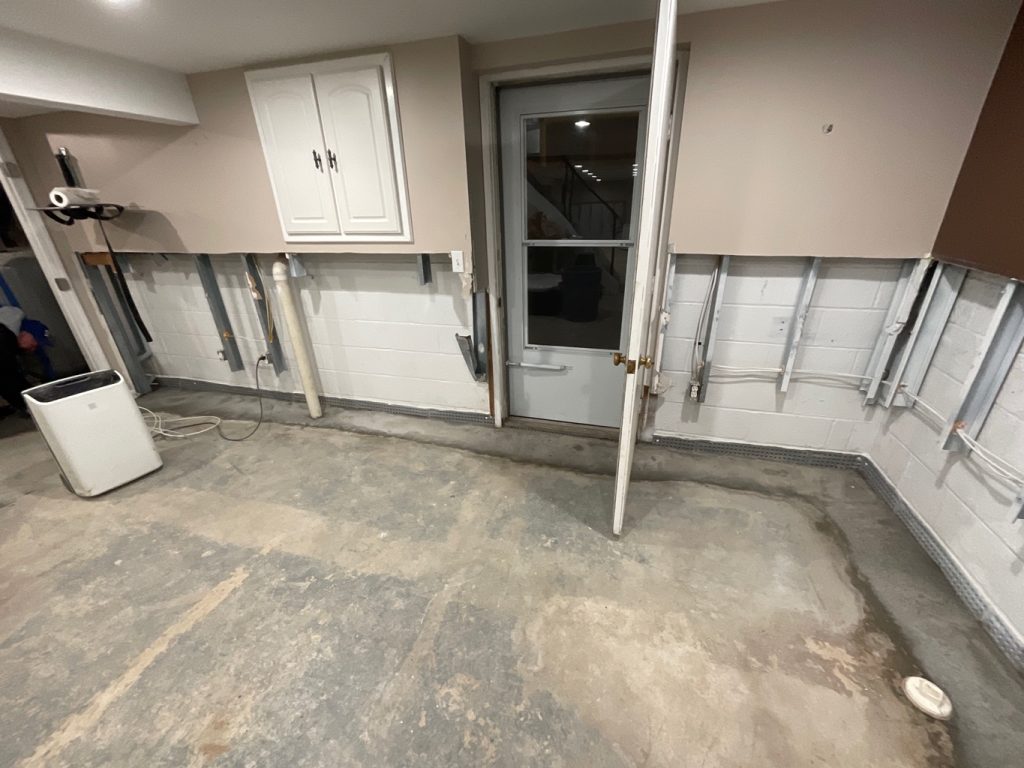
You’re down in your basement and notice a slight dip in the floor. Maybe a crack has appeared, or you feel a “soft spot” underfoot. You shrug it off—”It’s an old house,” you tell yourself. But over time, that dip gets deeper, cracks grow, and doors upstairs start to stick.
A sinking basement floor isn’t just a cosmetic issue. It’s a clear sign that something serious is happening beneath your home. Left unchecked, it can lead to structural damage, water intrusion, and costly repairs.
In this article, we’ll explain why basement floors sink, how to spot early warning signs, and what professional solutions are available to stop—and even reverse—the problem.
Key Takeaways
- A sinking basement floor often signals soil settlement, erosion, or water damage below the slab.
- Early warning signs include uneven surfaces, widening cracks, and sticking doors or windows upstairs.
- Ignoring a sinking floor can lead to major structural damage and water infiltration.
- Professional solutions include slab piers, foam injection (slab jacking), and improved drainage.
- Addressing underlying soil and water issues is critical for a long-term fix.
Why Basement Floors Sink
Most basement floors are poured concrete slabs that rest on prepared soil or compacted fill. While concrete is strong, its stability relies entirely on the support of the soil beneath it.
Common Causes of Sinking Floors
1. Soil Settlement
Over time, the soil beneath the slab may compress or shift due to:
- Poor compaction during original construction.
- Heavy loads (like storage or appliances) stressing the slab unevenly.
- Vibration from nearby construction or traffic.
2. Erosion or Washout
Water is the number one enemy of basement floors. It can erode soil beneath the slab, creating voids that cause sections to sink.
Sources of water erosion include:
- Poor exterior drainage (clogged gutters, improper grading).
- Plumbing leaks beneath the slab.
- High water table fluctuations.
3. Expansive Soils
In some regions, clay soils swell when wet and shrink when dry. These cycles create constant movement beneath the foundation, destabilizing basement floors.
4. Hydrostatic Pressure
Water pressure from saturated soil pushes against the basement slab and walls. Over time, this can lead to cracking and settlement.
Early Warning Signs
Catching the problem early is crucial. Here are the most common clues that your basement floor might be sinking:
Visible Cracks
Cracks are often the first sign of slab movement. Pay special attention to:
- Long, uneven cracks that widen over time.
- Cracks running across the entire floor.
- Cracks that appear after heavy rain or during dry spells.
Uneven or Sloping Surfaces
If objects roll or water pools in certain areas, you likely have a low spot forming. Over time, this can become more pronounced and spread.
Soft or “Bouncy” Spots
A floor that feels hollow or moves slightly under weight is a strong indicator of voids beneath the slab.
Sticking Doors or Windows Upstairs
A sinking floor can cause minor shifts in the overall structure, affecting how doors and windows operate on higher levels.
Gaps at Baseboards or Walls
Look for separation where the floor meets the walls. Gaps or uneven transitions can indicate differential movement.
The Risks of Ignoring a Sinking Floor
Structural Damage
As the slab continues to settle, it can stress the foundation walls and support beams. This may lead to:
- Cracks in basement or exterior walls.
- Bowing walls.
- Sagging joists or framing.
Water Intrusion
Sinking creates low points where water can collect, leading to leaks or flooding. Over time, moisture weakens concrete and encourages mold growth.
Decreased Home Value
Foundation and floor issues reduce property value, scare away buyers, and complicate home sales.
Increased Repair Costs
The longer you wait, the more extensive (and expensive) the repair. Early intervention always costs less.
Professional Repair Solutions
At All County Waterproofing, we know that each sinking basement floor is unique. Our repair strategy always starts with a detailed assessment to determine the best approach.
1. Slab Piers (Underpinning)
How it works:
- Steel piers are installed deep into stable soil beneath the slab.
- The slab is gently lifted and stabilized.
- Voids beneath the floor are filled to support the structure.
Best for:
- Severe settlement cases.
- Large sections of sinking floor.
- Homes with heavy slab loads.
2. Polyurethane Foam Injection (Slab Jacking)
How it works:
- Small holes are drilled into the slab.
- High-density polyurethane foam is injected underneath.
- As it expands, the foam fills voids and lifts the slab back to level.
Benefits:
- Quick and minimally invasive.
- Can be completed in a single day.
- Lightweight and water-resistant.
Best for:
- Moderate settlement.
- Floors with small to medium voids.
- When quick return to use is needed.
3. Soil Stabilization and Drainage Improvements
Why it matters:
Fixing the floor without fixing the soil and water problems is a short-term solution.
Typical improvements include:
- Regrading around the home to direct water away.
- Installing or improving gutters and downspouts.
- Installing French drains or sump pumps to manage groundwater.
Prevention and Maintenance Tips
Keep Water Away from the Foundation
- Extend downspouts at least 6–10 feet away.
- Grade soil to slope away from the house.
- Maintain and clean gutters regularly.
Monitor Basement Conditions
- Check for new or widening cracks.
- Watch for signs of moisture or pooling water.
- Use a dehumidifier to control humidity levels below 50%.
Limit Heavy Loads
Avoid concentrating heavy storage or appliances in one area of the basement, which can accelerate floor settlement.
Schedule Regular Inspections
Professional inspections every few years (or after major weather events) can catch early signs of settlement before they become major issues.
Frequently Asked Questions
How serious is a sinking basement floor?
A sinking floor is always a sign of underlying soil or structural issues and should never be ignored. Early repair can prevent severe damage.
How much does it cost to fix a sinking floor?
Costs vary depending on the repair method and severity. Foam injection might cost between $2,000 and $7,000, while slab piers can run higher depending on the number needed. A professional assessment provides the most accurate estimate.
Can I just pour new concrete over the old floor?
No. Pouring new concrete adds weight to an already unstable surface and can worsen settlement. Structural support must be addressed first.
Is slab jacking a permanent solution?
When done correctly and combined with soil stabilization and drainage improvements, slab jacking can provide long-lasting results.
Conclusion: Don’t Let Your Basement Floor Drag Down Your Home
A sinking basement floor is more than an eyesore—it’s a sign that your home’s foundation needs attention. Early intervention can save you money, protect your structure, and keep your basement dry and usable.
At All County Waterproofing, we don’t just lift your floor—we address the root causes to ensure your home stays level and secure for years to come.
Don’t wait for cracks to spread and floors to slope further. Schedule your professional basement floor evaluation today and put your home back on solid ground.
For more than a decade, we have been the go-to waterproofing and related services provider for homeowners across New Jersey. Our reputation has been built on a foundation of delivering exceptional workmanship and top-notch customer service to each and every one of our valued clients.
We truly understand the significance of your home to you and your family, as well as the importance of the services we offer in safeguarding your home. That’s why we take our responsibilities seriously and never compromise on the quality of our work. Our commitment to your satisfaction is unwavering, and we go above and beyond to ensure that you are completely content with every aspect of the job we perform.
When it comes to protecting your home, trust is of utmost importance. At our professional New Jersey Waterproofing Company, we prioritize the well-being of your basement and ensure it remains shielded from any harmful moisture damage, regardless of the job’s size. Whether you require waterproofing, mold remediation, or even foundational or structural repairs, we are always ready and eager to take on any challenge.
Our singular focus is your happiness, and we leave no stone unturned in achieving it. If you are searching for a trustworthy New Jersey waterproofing company to safeguard your home, look no further. Contact us today and experience firsthand what sets us apart from the competition. Your home’s protection is our major priority, and we are here to serve you with dedication and expertise.