Most homeowners believe that if mold is growing in the basement, it stays there. Out of sight, out of mind—right? Unfortunately, that couldn’t be further from the truth.
Mold doesn’t respect closed doors or floors. Once established, it can travel throughout your entire home, contaminating air ducts, furniture, and even your clothing. Mold spores are incredibly small and can easily become airborne, making them one of the most insidious threats to your family’s health and the structural safety of your home.
In this article, we’ll explain exactly how mold spreads from your basement to other areas, what signs to watch for, and the steps you can take to stop it before it affects your entire living space.
Key Takeaways
- Mold spreads through tiny spores that travel easily in air currents and HVAC systems.
- Basements and crawl spaces are common mold origin points, but they can quickly contaminate upper floors.
- Symptoms include musty smells, increased allergies, and mold appearing in unexpected areas.
- DIY cleaning often disperses more spores instead of containing them.
- Professional remediation stops mold at its source and prevents further spread.
How Mold Starts in the Basement
Basements and crawl spaces provide ideal conditions for mold growth:
- High humidity: Often above 60%, especially in spring and summer.
- Cool, dark spaces: Limited sunlight and airflow help mold colonies thrive.
- Porous materials: Wood beams, drywall, cardboard boxes, and carpeting provide food sources.
Once established, mold produces millions of microscopic spores that drift upward and outward, looking for new surfaces to colonize.
How Mold Travels Through Your Home
Air Currents and the Stack Effect
Your home naturally circulates air from lower to upper levels through a process known as the stack effect:
- Warm air rises and escapes through the attic or upper levels.
- Cooler air is drawn in from the basement or crawl space to replace it.
This natural airflow pulls mold spores up from the basement and distributes them throughout your living areas.
HVAC Systems
Your heating and cooling systems circulate air throughout the entire home. If mold spores enter the system:
- They get blown into every room.
- Spores settle in ductwork and vents, creating new mold colonies.
- Moisture from condensation on coils or ducts can help spores establish quickly.
Foot Traffic and Personal Items
Mold spores easily hitchhike on:
- Shoes and socks
- Clothing and laundry baskets
- Pets’ fur
Carrying mold spores upstairs spreads contamination room by room, often without you realizing it.
Where Mold Shows Up After Spreading
Once spores find a new moist environment, they can start to grow within 24–48 hours. Common secondary growth areas include:
- Bathrooms and laundry rooms (due to steam and humidity)
- Kitchen sinks and under-cabinet plumbing areas
- Window sills and frames
- Closets with poor ventilation
- HVAC ducts and filters
This secondary growth can occur far from the original basement colony and often goes unnoticed until it becomes severe.
Health Risks When Mold Spreads Indoors
The more mold spores circulating throughout your home, the greater the health risk.
Short-Term Effects
- Sneezing and nasal congestion
- Eye and skin irritation
- Headaches and dizziness
- Increased asthma attacks
Long-Term Effects
- Chronic sinus infections
- Persistent coughing and wheezing
- Allergic reactions or sensitization over time
- Immune system suppression
Children, elderly adults, and anyone with respiratory or immune conditions are especially vulnerable.
Signs Mold Has Spread Beyond Your Basement
- Musty odor on upper floors or in bedrooms.
- Allergy symptoms that worsen when at home.
- Mold spots appearing on walls, ceilings, or furniture in living spaces.
- Dark streaks or spots around HVAC vents.
- Visible mold growth in bathrooms or around window frames.
If any of these symptoms are present, mold is likely no longer confined to the basement.
Why DIY Cleanup Makes It Worse
Many homeowners attempt to clean mold with bleach or store-bought sprays. This usually:
- Disturbs colonies and releases more spores into the air.
- Doesn’t penetrate porous surfaces where mold roots (hyphae) live.
- Fails to address the source of moisture, ensuring the problem will return.
Without proper containment, HEPA filtration, and protective equipment, DIY cleaning often spreads mold more widely than before.
How Professional Remediation Stops the Spread
At All County Waterproofing, we use a comprehensive, multi-step approach to not only remove mold but also contain and prevent future spread.
1. Inspection and Air Quality Testing
- Identify mold sources and hidden colonies.
- Measure spore counts throughout the home.
- Locate moisture sources driving mold growth.
2. Containment
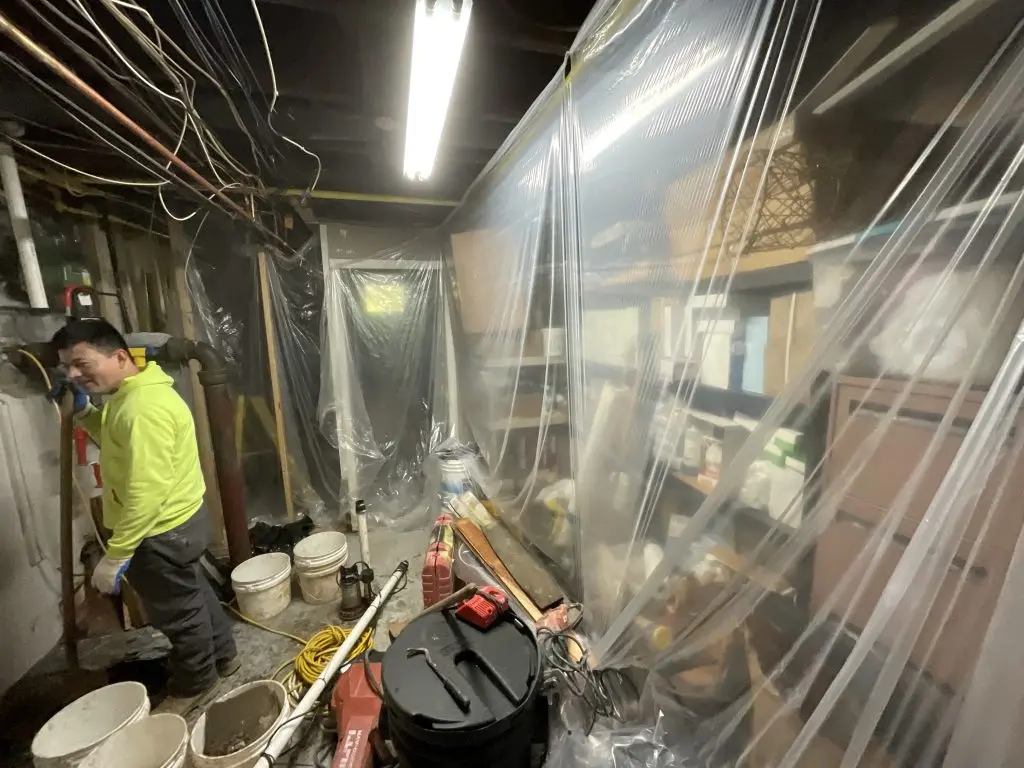
- Seal affected areas with plastic barriers.
- Use negative air machines to prevent spores from escaping during removal.
3. Air Filtration
- HEPA filtration systems capture airborne spores.
- Prevents redistribution throughout the home.
4. Safe Mold Removal
- Remove and dispose of contaminated materials (e.g., drywall, insulation).
- Clean and disinfect all surfaces with EPA-approved antimicrobial solutions.
5. Source Control
- Fix leaks or drainage problems causing moisture buildup.
- Install dehumidifiers or improve ventilation to keep humidity below 50%.
6. HVAC Cleaning
- Clean ductwork and replace filters.
- Sanitize HVAC components to remove spores lodged in the system.
Preventing Mold Spread in the Future
Control Moisture
- Keep humidity in all living spaces below 50%.
- Use exhaust fans in bathrooms and kitchens.
- Repair leaks immediately.
Improve Airflow
- Avoid blocking vents with furniture.
- Use ceiling fans or whole-house fans to encourage air circulation.
Regular Maintenance
- Inspect basements and crawl spaces every season.
- Check attic and crawl space insulation for signs of dampness.
- Service HVAC systems annually.
Frequently Asked Questions
Can mold really travel to upstairs bedrooms?
Yes. Through the stack effect and HVAC systems, mold spores easily spread to all areas of the home.
Is mold dangerous even if I can’t see it?
Yes. Airborne spores can cause health problems even without visible colonies. A musty smell is often the first sign.
Will cleaning vents stop mold spread?
Not on its own. While duct cleaning helps, the source colony must be removed, and the moisture issue addressed.
How long does full home mold remediation take?
Typically 3–7 days, depending on severity and how many areas are affected.
Conclusion: Contain Mold Before It Takes Over Your Home
Mold might start in your basement, but it doesn’t stay there. Left unchecked, it can travel to every corner of your house, affecting air quality, health, and structural safety.
At All County Waterproofing, we don’t just clean mold—we stop it at the source and prevent it from coming back. Our comprehensive approach protects your home and your family from the unseen dangers floating in your air.
Don’t wait until your whole home smells musty or allergies take over. Contact us today for a full mold inspection and reclaim your living space.
For more than a decade, we have been the go-to waterproofing and related services provider for homeowners across New Jersey. Our reputation has been built on a foundation of delivering exceptional workmanship and top-notch customer service to each and every one of our valued clients.
We truly understand the significance of your home to you and your family, as well as the importance of the services we offer in safeguarding your home. That’s why we take our responsibilities seriously and never compromise on the quality of our work. Our commitment to your satisfaction is unwavering, and we go above and beyond to ensure that you are completely content with every aspect of the job we perform.
When it comes to protecting your home, trust is of utmost importance. At our professional New Jersey Waterproofing Company, we prioritize the well-being of your basement and ensure it remains shielded from any harmful moisture damage, regardless of the job’s size. Whether you require waterproofing, mold remediation, or even foundational or structural repairs, we are always ready and eager to take on any challenge.
Our singular focus is your happiness, and we leave no stone unturned in achieving it. If you are searching for a trustworthy New Jersey waterproofing company to safeguard your home, look no further. Contact us today and experience firsthand what sets us apart from the competition. Your home’s protection is our major priority, and we are here to serve you with dedication and expertise.