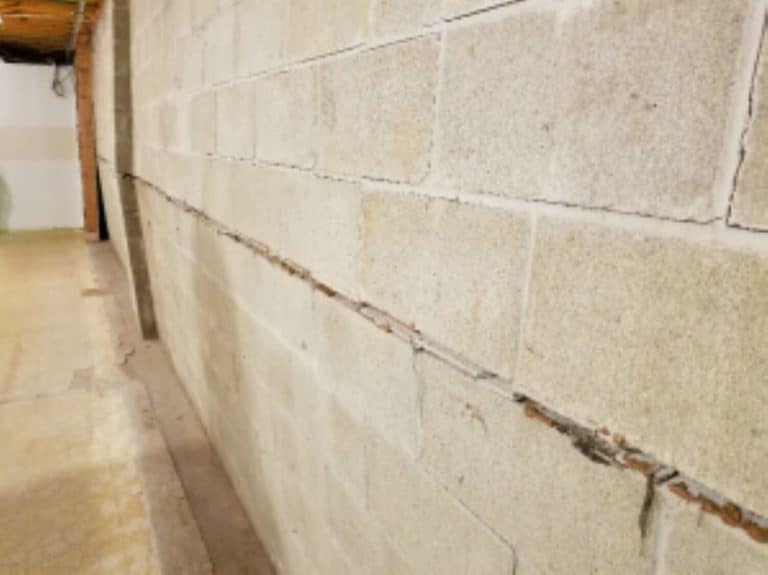
A bowed basement wall is one of those problems that can feel sudden, even though it usually builds over time. Maybe you noticed a horizontal crack running across a block wall. Maybe the wall looks slightly curved when you stand back and look down the length of it. Or maybe doors in the basement started sticking and you are seeing new gaps where the wall meets the floor.
Whatever the first sign was, bowed walls deserve attention. When a foundation wall bends inward, it is almost always responding to outside pressure. That pressure can come from saturated soil, expansive clay, freeze-thaw cycles, poor drainage, or backfill that is holding too much water against the home. Left alone, the wall can continue to move, cracks can widen, and repairs can become more disruptive and expensive.
This article explains the most common causes of bowed basement walls, how professionals evaluate wall movement, and which repair methods truly stabilize the wall long-term. You will also learn why some “quick fixes” fail, and how moisture control plays a huge role in preventing future movement.
Key Takeaways
- Bowed basement walls are typically caused by excess lateral soil pressure pushing inward.
- Horizontal cracks, stair-step cracks, wall bulging, and inward leaning are common warning signs.
- The best repair depends on how far the wall has moved, the wall material, and what is causing the pressure.
- Effective solutions often include structural reinforcement plus water and drainage correction.
- Professional structural repair is important because the wrong approach can leave the wall vulnerable to continued movement.
What Does It Mean When a Basement Wall Is Bowing?
A bowed basement wall is a foundation wall that has begun to curve inward toward the basement interior. Instead of staying straight and plumb, the wall is being pushed by forces outside the home. Over time, the wall can crack, shift, and lose its ability to safely resist pressure.
Bowing does not always look dramatic. In many homes it starts as a slight inward lean, a hairline horizontal crack, or subtle bulging at mid-wall height. That is why early detection matters. The earlier the wall is stabilized, the more repair options you typically have.
The Most Common Causes of Bowed Basement Walls
Bowed walls are rarely random. Most of the time, they are the result of one main issue: soil pressure becomes stronger than the wall’s ability to resist it.
1) Hydrostatic pressure from water-saturated soil
When soil around the foundation holds water, it gets heavier and pushes harder against the wall. This is especially common when:
- Downspouts dump water near the foundation
- Grading slopes toward the house
- Gutters overflow and soak the soil
- The yard collects water after storms
- Drainage systems are missing or failing
Hydrostatic pressure can be relentless. Even if you do not see standing water in the basement, saturated soil can still push with significant force.
2) Expansive clay soil swelling
Expansive clay expands when it absorbs water. In wet seasons, that swelling increases lateral pressure. In dry seasons, the clay can shrink, creating cycles of movement that stress the wall repeatedly. This “push and relax” pattern can gradually weaken masonry walls and increase cracking.
3) Freeze-thaw cycles and frost-related pressure
In colder climates, soil can freeze and expand. When it thaws, it settles again. Over time, repeated freeze-thaw cycles contribute to soil movement and increased pressure, especially if the area stays wet. The combination of moisture and freezing is one reason bowed walls often worsen over multiple winters.
4) Poor backfill and compaction
If the soil around the foundation was not compacted properly during construction, it can settle unevenly. That settlement can create pockets that collect water, which then increases pressure on the wall. Poor backfill can also mean the soil holds moisture longer than it should.
5) Heavy surface loads near the foundation
Driveways, patios, retaining walls, and even large planters can contribute to pressure if they add load near the foundation and reduce the soil’s ability to drain. The problem is not always the weight alone. It is that weight combined with saturated soil.
Warning Signs Homeowners Should Not Ignore
Bowed walls often come with visible clues. The key is not just noticing a crack, but understanding what the crack pattern suggests.
Common signs of wall bowing
- Horizontal cracks across block or poured concrete walls
- Stair-step cracks in block walls, especially near corners
- Inward bulging around the middle of the wall
- Walls that look “wavy” or curved when viewed from an angle
- Gaps where the wall meets the floor or where framing meets the wall
- Windows that stick, especially basement windows
- Evidence of moisture near the wall, such as dampness, staining, or efflorescence
Horizontal cracking is a particularly important sign because it is strongly associated with lateral pressure and wall movement.
How Professionals Evaluate a Bowed Basement Wall
A real structural evaluation is more than “yes or no.” Professionals typically assess:
- How far the wall has moved inward
- Whether the wall is actively moving or mostly stable
- The wall material and condition, such as block vs poured concrete
- Crack location, width, and pattern
- Water conditions outside and inside the foundation
- Soil factors that increase pressure, including drainage and grading
Why the amount of bowing matters
Repair methods are often chosen based on how severe the movement is. Mild movement can sometimes be stabilized with reinforcement. More advanced bowing may require systems that not only reinforce the wall but can also help correct it, depending on the structure and conditions.
This is also where homeowners benefit from professional guidance. Two homes can show similar cracking, but the underlying cause and best fix can be very different.
Which Structural Repair Methods Actually Work?
There are several proven repair options for bowed basement walls. The right choice depends on the wall type, the degree of bowing, access around the foundation, and the pressure source.
1) Carbon fiber reinforcement straps
Carbon fiber is a popular reinforcement option for certain bowed walls because it is strong, low-profile, and does not take up much basement space.
How it works: Carbon fiber straps are bonded to the wall with high-strength epoxy and anchored at the top and bottom. They act like vertical reinforcement that resists further inward movement.
Best for:
- Mild to moderate bowing
- Walls that are structurally sound but stressed
- Homeowners who want a low-visibility solution
Important note: Carbon fiber helps stop future movement, but it does not remove the pressure outside. That is why combining reinforcement with moisture and drainage improvements is often recommended.
2) Steel I-beams or wall braces
Steel beams are another common reinforcement method for bowed walls, especially when the wall needs stronger support or when carbon fiber is not the best fit.
How it works: Vertical steel beams are installed against the wall and anchored to the floor and the framing above. They provide rigid support to resist further bowing.
Best for:
- Moderate bowing
- Block walls that need stronger reinforcement
- Situations where a more rigid system is preferred
Steel bracing can be very effective, but it usually takes up more space than carbon fiber and may require specific installation conditions to anchor properly.
3) Wall anchors
Wall anchors can stabilize a bowed wall by tying it back to stable soil farther away from the foundation.
How it works: A steel plate is installed inside on the foundation wall, connected by a rod that runs through the wall to an anchor plate buried in the yard. When tightened, the system counters the inward force and can sometimes help straighten the wall gradually.
Best for:
- Walls with moderate bowing
- Homes with enough yard space for proper anchor placement
- Situations where soil conditions allow secure anchoring
Wall anchors can be a strong long-term solution, but they require exterior access and enough space outside the home.
4) Helical tiebacks
Helical tiebacks are similar in concept to wall anchors but use screw-like steel shafts that are installed into the soil at an angle.
How it works: The tieback is driven into stable soil, then connected to a wall plate inside. This creates a strong pull-back force against the wall.
Best for:
- Areas with limited yard space where traditional anchors are not ideal
- Situations where stronger anchoring is needed
- Certain soil conditions where helical systems perform well
Tiebacks can be a great option when access and soil conditions support them, especially for walls showing meaningful movement.
5) Exterior excavation and rebuild, or advanced structural correction
In severe cases, reinforcement alone may not be enough. If a wall is significantly bowed, cracked, or compromised, professionals may recommend more extensive structural repair. That can include partial rebuild strategies, exterior excavation to relieve pressure, or combined approaches that address both structural integrity and water management.
This type of repair is more involved, but it may be the most responsible option when the wall’s safety margin is reduced.
Why Moisture Control Is Part of a Real Structural Repair Plan
If outside pressure caused the bowing, then stopping movement often requires reducing that pressure. Structural reinforcement holds the wall in place, but moisture control helps prevent the pressure from building again.
Common moisture and drainage improvements that support wall repairs
- Extending downspouts away from the foundation
- Improving grading so water flows away from the home
- Correcting gutter issues that cause overflow
- Installing drainage systems that reduce water buildup near the wall
- Addressing basement water intrusion pathways
Even the strongest structural repair benefits from a dry, well-managed foundation environment. When soil stays saturated, the forces on the wall remain higher.
Repairs That Often Fail or Create False Confidence
Homeowners are frequently offered quick fixes that look good for a while but do not stabilize the wall.
Common examples
- Patching cracks without reinforcing the wall
- Painting over cracks or moisture staining
- Using interior coatings as the only “solution” to pressure-related movement
- Ignoring exterior drainage issues that keep soil saturated
Cosmetic work can be helpful after structural stabilization, but it should not be the main plan when a wall is bowing.
How Fast Do Bowed Walls Get Worse?
Some bowed walls progress slowly over years, while others worsen more quickly after heavy rain seasons or repeated freeze-thaw cycles. Acceleration is more likely when:
- Drainage is poor and soil stays wet
- The wall is already cracked and weakened
- Expansive clay soil is present
- The home experiences repeated seasonal water cycles
Because progression varies, monitoring and professional evaluation matter. Even if the wall seems “fine for now,” movement can continue quietly until it becomes more expensive to correct.
What You Can Do Right Now as a Homeowner
You do not need to panic, but you should take smart steps.
Practical next actions
- Take clear photos of cracks and any bulging areas.
- Note whether doors, windows, or floors feel different over time.
- Check downspouts and make sure they discharge away from the foundation.
- Look at grading around the home and identify areas where water collects.
- Avoid heavy loads near the foundation wall if drainage is already poor.
- Schedule a professional structural evaluation to confirm the best repair path.
These steps help you avoid guesswork and build a plan that makes sense for your specific home.
Frequently Asked Questions
Are horizontal cracks always a sign of a serious issue?
Horizontal cracks often indicate lateral pressure and potential wall movement, especially in block walls. Some horizontal cracking may start small, but it should be evaluated because it can worsen if pressure continues.
Can a bowed wall be straightened?
In some cases, yes. Systems like wall anchors or tiebacks can sometimes improve alignment gradually, depending on how far the wall has moved and the wall’s condition. In other cases, the goal is stabilization rather than full straightening.
Is carbon fiber strong enough for bowed walls?
Carbon fiber is extremely strong and can be effective for mild to moderate bowing when installed properly. The right choice depends on the degree of movement and the condition of the wall.
Do I need to fix drainage if I reinforce the wall?
It is strongly recommended in many cases. Reinforcement addresses the symptom, but drainage and moisture control address the cause, which reduces future pressure and lowers the risk of continued movement.
How do I know which repair option is right for my basement?
A professional assessment looks at wall movement, crack patterns, soil and water conditions, and structural load paths. That evaluation determines whether reinforcement, anchors, tiebacks, or more extensive repair is the best fit.
Conclusion
Bowed basement walls are usually caused by outside forces, most commonly water-saturated soil, expansive clay, and poor drainage that increases lateral pressure. The most effective repairs are the ones that stabilize the structure and reduce the conditions that created the problem in the first place.
If you are seeing horizontal cracks, inward bulging, or signs that a basement wall is shifting, it is worth having the wall evaluated by professionals who specialize in foundation repair and structural repair. A well-designed plan can stop movement, protect your home’s value, and give you confidence that the wall will remain stable for years to come.
For more than a decade, we have been the go-to waterproofing and related services provider for homeowners across New Jersey. Our reputation has been built on a foundation of delivering exceptional workmanship and top-notch customer service to each and every one of our valued clients.
We truly understand the significance of your home to you and your family, as well as the importance of the services we offer in safeguarding your home. That’s why we take our responsibilities seriously and never compromise on the quality of our work. Our commitment to your satisfaction is unwavering, and we go above and beyond to ensure that you are completely content with every aspect of the job we perform.
When it comes to protecting your home, trust is of utmost importance. At our professional New Jersey Waterproofing Company, we prioritize the well-being of your basement and ensure it remains shielded from any harmful moisture damage, regardless of the job’s size. Whether you require waterproofing, mold remediation, or even foundational or structural repairs, we are always ready and eager to take on any challenge.
Our singular focus is your happiness, and we leave no stone unturned in achieving it. If you are searching for a trustworthy New Jersey waterproofing company to safeguard your home, look no further. Contact us today and experience firsthand what sets us apart from the competition. Your home’s protection is our major priority, and we are here to serve you with dedication and expertise.