
If you find water pooling on your basement floor after heavy rainstorms, you are not alone. Hydrostatic pressure—the buildup of water weight in the soil beneath and surrounding your foundation—forces groundwater through the path of least resistance. Most commonly, water enters at the cove joint (where the concrete floor meets the foundation wall) or through floor slab cracks. An interior French drain system, also known as a perimeter drainage system, is widely recognized as the most effective, permanent solution to manage hydrostatic pressure and keep sub-floor moisture away from your living space.
What Is an Interior French Drain System?
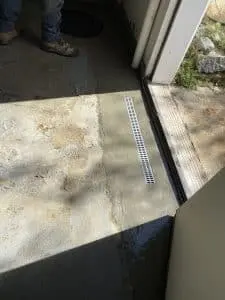
Unlike traditional exterior drains that require massive excavation around your yard, an interior French drain is installed beneath your basement floor slab along the inside perimeter. It acts as an underground interceptor network designed to capture water before it spills across your basement floor.
Key Components of a Sub-Slab System
- Perforated Drainage Pipe: Rigid, pitched PVC piping buried beneath the slab to collect incoming groundwater.
- Washed Filter Aggregate: Clean stone surrounding the pipe to strain out sediment and encourage smooth water flow.
- Wall Vapor Barrier: Heavy-duty wall sheeting that captures seepage running down foundation walls and directs it into the sub-floor channel.
- Sump Pump System: A high-capacity pump and basin that collects channeled water and ejects it safely away from the home.
Signs Your Home Needs an Interior Drainage System
Recognizing the warning signs early prevents costly water damage, ruined personal property, and mold infestation:
- Cove Joint Water Seepage: Water consistently bubbling up along the seam where the floor meets the foundation wall.
- Efflorescence on Walls: Chalky, white mineral deposits left behind as moisture evaporates through concrete blocks.
- Persistent Musty Odors: High humidity levels triggering mildew growth beneath carpets or behind finished drywall.
- Slab Flaking and Peeling Paint: Hydrostatic pressure pushing moisture through the concrete, causing surface deterioration.
Step-by-Step Professional Installation Process
Installing an interior perimeter drain requires specialized tools, precise trench pitching, and dust-containment measures to ensure long-term functionality.
Step 1: Perimeter Concrete Trenching
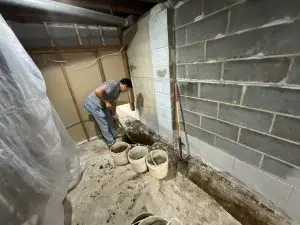
Installers jackhammer and remove a 10-to-12-inch strip of concrete floor slab around the entire basement perimeter to expose the foundation footing.
Step 2: Trench Excavation and Pitching
Dirt and debris are excavated alongside the footing to create a continuous trench. The trench is pitched downhill toward the sump pit location to rely on gravity for water movement.
Step 3: Laying Filter Fabric, Gravel, and Perforated Pipe
Heavy-duty filter fabric lines the trench to prevent silt clogging. Installers place a layer of washed stone, lay slotted rigid PVC drain pipe, and surround it with additional gravel.
Step 4: Wall Sheeting and Sump Pump Connection
A dimpled wall membrane is fastened to the lower wall edge, directing any wall weeping into the drain channel. The drain line is tied directly into a high-grade sump pump basin equipped with a check valve and discharge line.
Step 5: Concrete Slab Restoration
The trench is backfilled and poured over with fresh concrete, restoring a smooth, seamless floor finish ready for finishing materials.
Interior French Drain Cost Breakdown
On average, installing a professional interior French drain system costs between $50 and $80 per linear foot. For a standard 100-to-150-linear-foot basement perimeter, total project costs typically range from $4,500 to $10,000.
Primary Cost Factors
- Perimeter Length: Total square footage and linear distance around the foundation walls.
- Sump Pump Upgrade: Adding a primary pump and a battery backup pump system (typically adds $1,200 to $2,500).
- Slab Thickness & Hardness: Extra labor required to break through reinforced or unusually thick concrete.
Interior Drainage vs. Alternatives
When evaluating basement waterproofing, it helps to compare interior drains against alternative approaches:
1. Exterior French Drains
Exterior drainage involves excavating the soil down to the foundation footings outside your home. While highly effective at stopping water before it touches the foundation, exterior systems cost significantly more (ranging from $10,000 to $25,000+) and require disrupting landscaping, decks, and driveways.
2. Exterior Surface Grading & Downspout Extensions
Regrading soil to slope away from the foundation and extending gutter downspouts 6 to 10 feet out is an essential low-cost preventive measure. However, surface grading alone cannot fix high water tables or deep hydrostatic soil pressure.
3. Baseboard Drainage Channels
Above-slab plastic channels glued directly to the floor edge offer a cheaper alternative, but they fail to relieve sub-slab hydrostatic pressure and are prone to ungluing over time.
Frequently Asked Questions
How much does an interior French drain system cost per linear foot?
Professional interior French drain systems cost between $50 and $80 per linear foot, depending on floor thickness, basement accessibility, and sump pump selection.
Does installing an interior French drain require digging up my yard?
No. Interior perimeter drains are installed entirely inside your basement beneath the floor slab, leaving your landscaping, lawn, and outdoor structures completely untouched.
How long does a sub-floor interior drainage system last?
When installed using rigid, slotted PVC pipe rather than flexible corrugated tubing, a professionally installed interior French drain system is engineered to last for the life of the home.
Keep Your Basement Dry All Year Long
Tired of water pooling on your basement floor every time it rains? Contact our certified waterproofing specialists today for a free home evaluation and a customized interior drainage plan!
For more than a decade, we have been the go-to waterproofing and related services provider for homeowners across New Jersey. Our reputation has been built on a foundation of delivering exceptional workmanship and top-notch customer service to each and every one of our valued clients.
We truly understand the significance of your home to you and your family, as well as the importance of the services we offer in safeguarding your home. That’s why we take our responsibilities seriously and never compromise on the quality of our work. Our commitment to your satisfaction is unwavering, and we go above and beyond to ensure that you are completely content with every aspect of the job we perform.
When it comes to protecting your home, trust is of utmost importance. At our professional New Jersey Waterproofing Company, we prioritize the well-being of your basement and ensure it remains shielded from any harmful moisture damage, regardless of the job’s size. Whether you require waterproofing, mold remediation, or even foundational or structural repairs, we are always ready and eager to take on any challenge.
Our singular focus is your happiness, and we leave no stone unturned in achieving it. If you are searching for a trustworthy New Jersey waterproofing company to safeguard your home, look no further. Contact us today and experience firsthand what sets us apart from the competition. Your home’s protection is our major priority, and we are here to serve you with dedication and expertise.