
Discovering that your basement walls are bowing inward is one of the most alarming issues a homeowner can face. A bowing foundation wall isn’t just a cosmetic flaw; it is a clear sign that structural integrity is compromised. If left untreated, subtle wall deflection can progress to severe cracking, structural failure, and catastrophic foundation collapse. Understanding what causes wall bowing, recognizing the early warning signs, and knowing your repair options will help you protect your home’s safety and property value.
What Causes Basement Walls to Bow Inward?
Basement walls are built to support the vertical load of your home, but they are vulnerable to extreme lateral (sideways) pressure from the surrounding soil. Several factors contribute to this force:
Hydrostatic Soil Pressure and Freeze-Thaw Cycles
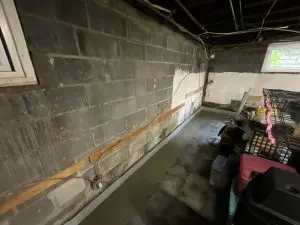
The primary driver of bowing foundation walls is hydrostatic pressure. When clay-rich or poorly draining soil around your home becomes saturated with water, it expands and exerts tremendous weight against your basement walls. During winter months, this wet soil freezes and expands further, pushing the foundation inward step by step.
Poor Exterior Grading and Clogged Downspouts
Improper site drainage compounds hydrostatic pressure. Misdirected downspouts, clogged gutters, or lawn grading that slants toward your foundation channels thousands of gallons of rainwater directly into the soil surrounding your basement walls.
Mortar Joint Shear in Concrete Block Foundations
Concrete block (cinder block) foundations are particularly susceptible to wall bowing. Over time, the horizontal mortar joints weaken under continuous soil expansion, causing the middle section of the wall to shear and deflect inward while the top and bottom remain anchored.
Warning Signs Your Foundation Wall Is Losing Structural Integrity
Catching foundation failure early saves thousands of dollars in restoration costs. Look out for these critical warning indicators:
- Horizontal Cracks: Cracks running horizontally along the middle of concrete block mortar lines or poured concrete walls.
- Inward Tilting or Shearing: The top of the basement wall leans inward, or the bottom row of block slides inward off the footing.
- Stair-Step Mortar Cracks: Diagonal cracks following the mortar joint pattern toward corners.
- Upper-Floor Misalignment: Windows and interior doors on the first floor sticking or failing to latch properly due to subtle structural shifts.
Professional Foundation Stabilization Options Compared
Modern structural engineering offers non-invasive, permanent solutions to stabilize and reinforce bowing basement walls without requiring complete foundation replacement.
Option 1: Carbon Fiber Wall Straps
Carbon fiber reinforcement is the premier solution for walls experiencing minor to moderate deflection (less than 2 inches of bow). Lightweight, space-saving, and virtually unbreakable, carbon fiber straps are bonded directly to the wall using high-tensile epoxy. They lock the wall in place permanently and can be painted over for a clean basement finish.
Option 2: Structural Steel I-Beams
For severe bowing exceeding 2 inches or walls experiencing inward shear at the base, steel I-beams provide heavy-duty structural support. Custom-fitted steel beams are anchored into the basement floor slab and connected to the floor joists above, preventing any further wall movement.
Option 3: Wall Anchors and Tie-Backs
Wall anchor systems utilize heavy-duty steel plates installed inside the basement wall, connected via steel rods to earth anchors driven deep into stable soil outside the foundation. Over time, these anchors can be tightened to pull bowing walls back toward plumb.
How Much Does Bowing Foundation Wall Repair Cost?
The cost of repairing bowing basement walls varies based on the extent of wall deflection, basement height, accessibility, and the chosen stabilization method:
- Carbon Fiber Repair: Typically ranges from $5,000 to $9,000 for standard residential walls.
- Steel I-Beam Reinforcement: Generally ranges from $7,000 to $15,000, depending on the number of beams required.
- Full Wall Anchor Systems: Ranging from $6,000 to $12,000 based on soil composition and anchoring depth.
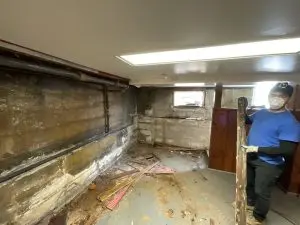
While repair costs represent a significant investment, delaying structural stabilization leads to wall failure, which requires complete exterior excavation and rebuild costs that frequently exceed $30,000 to $50,000.
Frequently Asked Questions
Can carbon fiber straps really hold back a bowing concrete block wall?
Yes. Carbon fiber straps engineered with high-strength epoxy possess ultimate tensile strength up to ten times greater than structural steel. When installed on walls with under 2 inches of deflection, carbon fiber permanently prevents further bowing.
Will a bowing foundation wall decrease my home’s resale value?
Unaddressed foundation bowing can reduce home market value by 15% to 20% and cause potential buyer mortgage applications to fail. However, installing an engineered repair system backed by a transferable warranty fully protects property value.
How long does carbon fiber or steel I-beam foundation repair take?
Most residential wall stabilization installations are completed within 1 to 2 business days with minimal disruption to your daily routine.
Protect Your Home by Addressing Bowing Basement Walls Early
Bowing basement walls are more than a cosmetic concern. Horizontal cracks, inward movement, and shifting foundation blocks can indicate increasing pressure against your foundation and should be evaluated before the damage progresses.
The right repair method depends on the severity and type of wall movement. Carbon fiber straps may be suitable for minor to moderate bowing, while steel I-beams or wall anchor systems can provide additional stabilization when more substantial structural reinforcement is needed.
Addressing the problem early can help prevent further foundation movement, protect your home’s structural integrity, and reduce the risk of more extensive repairs in the future.
If you’ve noticed bowing walls, horizontal cracks, or other signs of foundation movement, don’t wait for the problem to worsen. Schedule a professional foundation evaluation today to identify the cause, determine the appropriate repair solution, and protect your home for years to come.
For more than a decade, we have been the go-to waterproofing and related services provider for homeowners across New Jersey. Our reputation has been built on a foundation of delivering exceptional workmanship and top-notch customer service to each and every one of our valued clients.
We truly understand the significance of your home to you and your family, as well as the importance of the services we offer in safeguarding your home. That’s why we take our responsibilities seriously and never compromise on the quality of our work. Our commitment to your satisfaction is unwavering, and we go above and beyond to ensure that you are completely content with every aspect of the job we perform.
When it comes to protecting your home, trust is of utmost importance. At our professional New Jersey Waterproofing Company, we prioritize the well-being of your basement and ensure it remains shielded from any harmful moisture damage, regardless of the job’s size. Whether you require waterproofing, mold remediation, or even foundational or structural repairs, we are always ready and eager to take on any challenge.
Our singular focus is your happiness, and we leave no stone unturned in achieving it. If you are searching for a trustworthy New Jersey waterproofing company to safeguard your home, look no further. Contact us today and experience firsthand what sets us apart from the competition. Your home’s protection is our major priority, and we are here to serve you with dedication and expertise.