Discovering inward curves, horizontal cracks, or prominent bulges in your basement walls is a clear signal of structural distress. A bowing foundation wall isn’t merely a cosmetic defect—it indicates that external soil pressures are compromising your home’s structural integrity. Left unchecked, wall deflection can lead to total foundation failure, compromised living areas, and severe property value loss. Understanding why foundation walls bow, how much repairs cost, and which permanent fixes work best will help you protect your investment before minor movement turns into a major disaster.
What Causes Foundation Walls to Bow, Lean, or Shear?
Foundation walls are designed to support massive vertical loads from the structure above, but they are vulnerable to horizontal force. When external forces exceed the lateral strength of concrete block or poured concrete, the wall bows inward, leans from the top, or shears at the bottom seam.
Expansive Soil and Hydrostatic Pressure
The primary culprit behind bowing foundation walls is hydrostatic pressure. When heavy rains saturate the soil surrounding your home—especially clay-rich expansive soils—the earth expands significantly. This water-logged soil acts like a wedge, exerting thousands of pounds of lateral force against your basement walls. As the soil dries and expands through seasonal wet-dry cycles, the constant push-and-pull weakens the structural masonry, pushing it inward.
Frost Heave and Inadequate Exterior Drainage
In colder climates, frost heave adds extra lateral stress. Water saturated near foundation walls freezes, expands, and exerts intense inward pressure. Poor exterior drainage exacerbates this issue; clogged gutters, short downspout extensions, and improper ground slope concentrate surface water directly against foundation footings, accelerating soil movement and structural stress.
Warning Signs: Identifying Wall Movement Before Failure Occurs
Catching structural movement early saves tens of thousands of dollars in restoration costs. Inspect your basement and living areas regularly for these red flags:
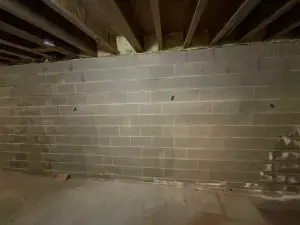
- Horizontal Wall Cracks: Usually running mid-height along mortar lines in block walls, horizontal cracks indicate lateral soil pressure pushing the wall inward.
- Inward Deflection: A visible bulge, curve, or lean along the center or top of the wall.
- Stair-Step Cracking: Diagonal mortar cracks near the corners of concrete block foundations.
- Sticking Windows and Doors: Upper-floor frame distortion caused by settling or shifting floor joists above the bowing wall.
- Separation at the Joists: Space opening up between top foundation wall plates and floor joists.
Professional Repair Solutions and Cost Breakdown
Repairing a bowing wall requires specialized structural engineering methods designed to stabilize or pull the foundation back into position. On average, homeowners pay between $4,000 and $12,000+ for bowing wall repairs, depending on the severity of deflection, linear footage, and method used.
Carbon Fiber Wall Straps (Minor-to-Moderate Deflection)
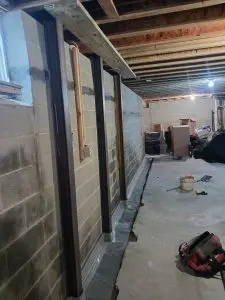
For walls with less than 2 inches of inward bowing, carbon fiber straps offer a low-profile, non-invasive fix. Epoxy-bonded directly to the interior wall surface, high-tensile carbon fiber strips tie the foundation to the rim joists and footings. Because carbon fiber does not stretch, it permanently locks the wall in place, preventing further movement.
Average Cost: $350 to $600 per strap (total jobs typically range from $3,500 to $6,000).
Helical Tiebacks and Wall Anchors (Severe Movement)
When bowing exceeds 2 inches, structural engineers utilize heavy-duty wall anchors or helical tiebacks. Wall anchors involve driving steel rods through the foundation into stable soil outside the basement, connected to interior steel wall plates. Torque is applied to pull the wall back toward its original plumb position over time.
Average Cost: $7,000 to $15,000+ depending on site access, soil density, and necessary exterior excavation.
What Happens During a Professional Structural Foundation Inspection?
A qualified foundation repair specialist evaluates the total environment, not just the visible crack. During an inspection, the technician will measure the precise degree of wall deflection using laser levels, evaluate soil moisture conditions, inspect exterior drainage paths, and check floor joists for structural detachment. You will receive a clear, engineered scope of work tailored to permanently stabilize your home.
Frequently Asked Questions
How much does it cost to fix a bowing foundation wall?
Costs typically range from $4,000 to $12,000+ depending on the severity of deflection, linear footage, and whether carbon fiber straps or heavy-duty wall anchors are required.
Can bowing walls be repaired from the inside, or is excavation necessary?
Carbon fiber reinforcement and wall anchors can often be installed from the interior, though severe soil pressure or wall rebuilding may require exterior excavation to push the wall back into position.
Will homeowners insurance cover bowing foundation wall repair?
Standard home insurance policies rarely cover foundation movement caused by soil pressure, hydrostatic force, or settling, making early structural intervention critical to prevent catastrophic loss.
Schedule Your Comprehensive Foundation Inspection
Don’t wait for structural cracks to compromise your home’s safety and value. Contact our local structural experts today to schedule a free, comprehensive foundation inspection and secure a permanent solution for your bowing walls.
For more than a decade, we have been the go-to waterproofing and related services provider for homeowners across New Jersey. Our reputation has been built on a foundation of delivering exceptional workmanship and top-notch customer service to each and every one of our valued clients.
We truly understand the significance of your home to you and your family, as well as the importance of the services we offer in safeguarding your home. That’s why we take our responsibilities seriously and never compromise on the quality of our work. Our commitment to your satisfaction is unwavering, and we go above and beyond to ensure that you are completely content with every aspect of the job we perform.
When it comes to protecting your home, trust is of utmost importance. At our professional New Jersey Waterproofing Company, we prioritize the well-being of your basement and ensure it remains shielded from any harmful moisture damage, regardless of the job’s size. Whether you require waterproofing, mold remediation, or even foundational or structural repairs, we are always ready and eager to take on any challenge.
Our singular focus is your happiness, and we leave no stone unturned in achieving it. If you are searching for a trustworthy New Jersey waterproofing company to safeguard your home, look no further. Contact us today and experience firsthand what sets us apart from the competition. Your home’s protection is our major priority, and we are here to serve you with dedication and expertise.